
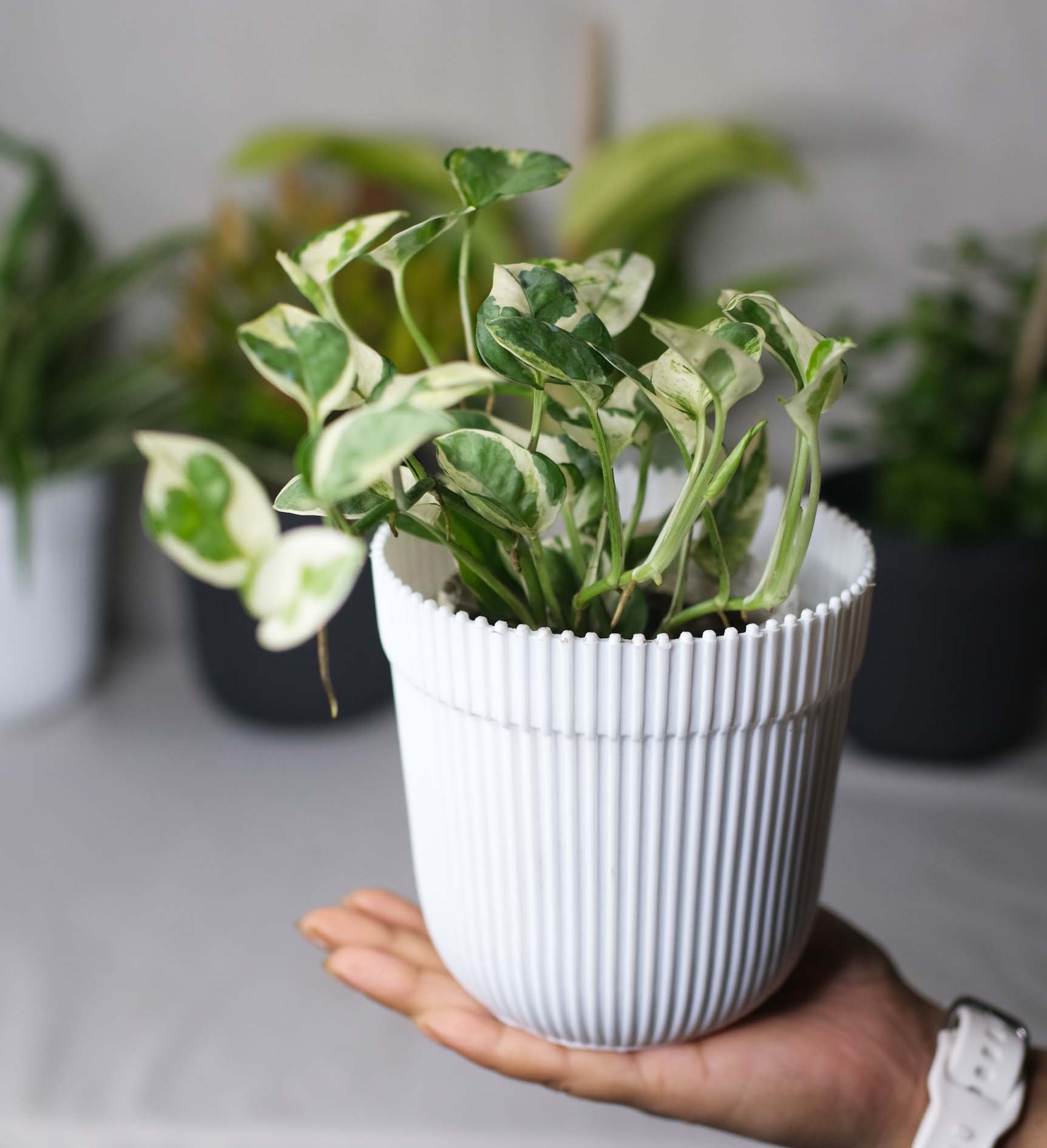
Epipremnum aureum (Commonly known as Pothos, Money Plant, Devil’s Ivy)
Epipremnum aureum is a highly popular and incredibly versatile houseplant belonging to the Araceae family. Native to the Solomon Islands, it’s widely cultivated worldwide due to its striking appearance, ease of care, and ability to thrive in various indoor conditions. It’s often called “Devil’s Ivy” because it’s nearly impossible to kill and stays green even when kept in the dark.
Key Botanical Characteristics:
-
Foliage: The most prominent feature of Epipremnum aureum is its attractive, heart-shaped or ovate leaves. While the “Golden Pothos” (or Golden Money Plant) variety is the most common and features splashes of yellow or gold variegation on a green background, other cultivars exist with different patterns and colors (e.g., ‘Marble Queen’ with white variegation, ‘Neon’ with bright lime-green leaves, ‘Jessenia’ with muted lime-green and dark green). The leaves are typically glossy and can grow quite large in mature plants or optimal conditions.
-
Growth Habit: It is a vining plant, which means its stems naturally trail downwards or climb upwards using aerial roots to cling to surfaces. In its natural jungle habitat, it can grow enormous, scaling trees and reaching impressive lengths. As a houseplant, it’s often grown in hanging baskets to showcase its cascading vines or trained to climb moss poles or trellises for a more upright display.
-
Stems and Roots: The stems are relatively thick and flexible. Nodes along the stems are where leaves emerge and where aerial roots form. These roots are not only for climbing but also absorb moisture and nutrients from the air.
-
Size: Indoors, its vines can easily reach lengths of 6-10 feet (1.8-3 meters) or more if left untrimmed. Leaf size can range from a few inches to over a foot in diameter on very mature plants.
-
Flowers: While it belongs to the arum family and can produce spathe and spadix flowers (similar to a Peace Lily), Epipremnum aureum rarely flowers when grown indoors, especially in its common houseplant form. Its appeal lies almost entirely in its foliage.
Common Varieties/Cultivars:
-
Golden Pothos: Green leaves with prominent golden-yellow variegation.
-
Marble Queen Pothos: Green leaves heavily variegated with creamy white.
-
Neon Pothos: Bright, almost glowing, lime-green leaves.
-
Jade Pothos: Solid, dark green leaves.
-
Jessenia Pothos: Green leaves with more subtle, muted lime-green variegation.
-
N’Joy Pothos: Green leaves with distinct white margins and variegation, similar to ‘Pearl and Jade’ but with a more pronounced white.
Care Requirements (Making it an Ideal Houseplant):
-
Light: Prefers bright, indirect light. It can tolerate low light conditions, but variegation may fade, and growth will slow. Direct sunlight can scorch the leaves.
-
Water: Water thoroughly when the top 1-2 inches of soil are dry. It’s crucial to avoid overwatering, as it’s susceptible to root rot.
-
Humidity: Tolerates average household humidity but appreciates higher levels, especially in dry indoor environments.
-
Soil: A well-draining, general-purpose potting mix is suitable.
-
Temperature: Thrives in average room temperatures, ideally between 65-85°F (18-29°C).
-
Fertilization: Feed monthly during the growing season (spring and summer) with a balanced liquid fertilizer. Reduce or cease feeding in fall and winter.
-
Pruning: Can be pruned regularly to maintain shape, encourage bushier growth, or propagate new plants.
Symbolism and Benefits:
-
Good Luck/Prosperity: In many cultures, particularly in Asian traditions, the plant is associated with good fortune and financial prosperity.
-
Air Purification: Recognized by NASA’s Clean Air Study for its ability to remove common indoor air pollutants such as formaldehyde, benzene, and xylene, contributing to healthier indoor environments.
-
Aesthetic Appeal: Its lush foliage and adaptable growth habit make it a popular decorative plant for homes, offices, and public spaces, adding a vibrant touch of nature.
Here’s an image of an Epipremnum aureum plant, showcasing its typical appearance:


